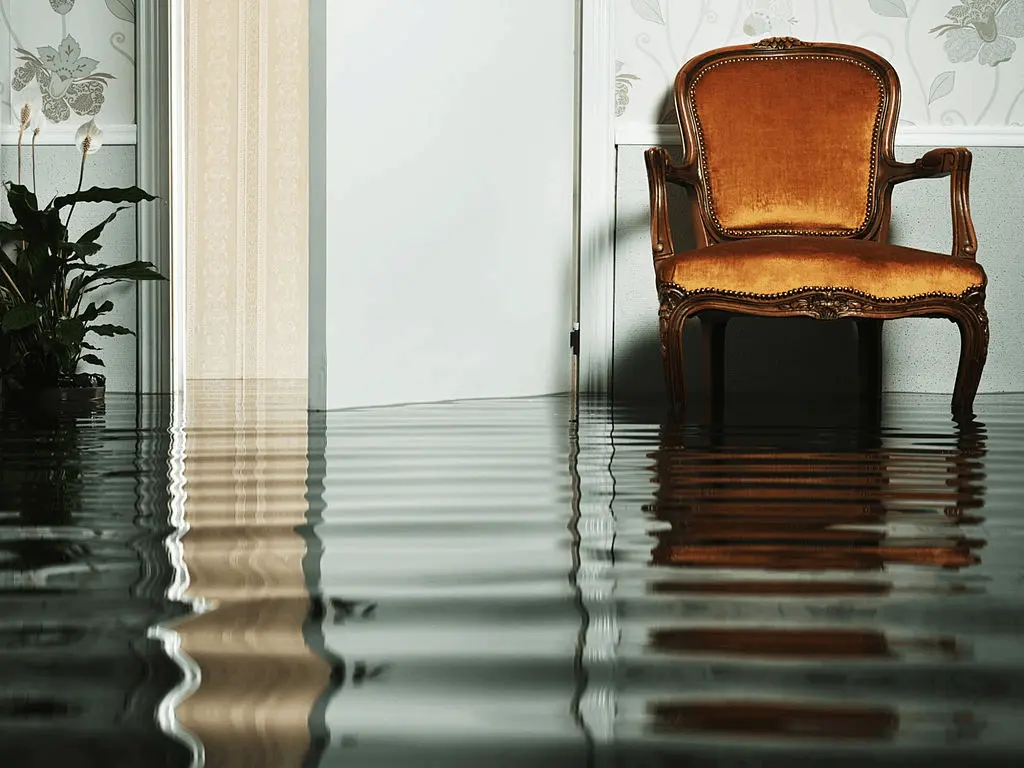
If water is coming through the door, pooling under the carpet, or dripping through the ceiling, it is completely normal to feel overwhelmed. Take a breath. The first hour matters most, but you do not need to solve the whole problem at once. Your priority is safety, evidence, and getting professional flood restoration Auckland help on the way before moisture spreads into walls, subfloors and cabinetry.
This guide is written for Auckland homeowners dealing with burst pipes, stormwater ingress, appliance leaks, overflowing drains or sudden water damage Auckland emergencies. Follow the steps below in order, and only do what is safe.
Step 1 — Safety first: turn off power at the mains
Water and electricity are a dangerous combination. If water is near power points, appliances, a switchboard, extension leads, heated towel rails or underfloor wiring, stay out of the affected area and turn off electricity at the mains if you can reach the switchboard without walking through water. If you cannot access it safely, leave the property and call an electrician or emergency services for guidance.
Do not enter rooms where ceilings are sagging, where floodwater may be contaminated, or where you can smell smoke, gas, sewage or chemicals. Keep children and pets away from wet carpet and standing water. If the flooding is from stormwater or sewage, treat it as contaminated until a restoration specialist confirms otherwise.
Step 2 — Document everything for your insurance claim
Before moving items, take clear photos and videos. Start wide, then go close. Capture the source of water if visible, the depth of water, wet carpet edges, skirting boards, damaged furniture, affected rooms, ceilings, cupboards and any electronics. If water is still entering, record that too.
Make a quick written note of the time you discovered the flood, what you think caused it, and any action taken. Keep receipts for emergency plumbing, electrical checks, accommodation or urgent purchases. Your insurer may ask for evidence that you acted quickly to prevent further damage. Good documentation makes the claim smoother and helps the restoration team map the original moisture footprint.
Step 3 — Remove water — but only what's safe to move
If the water is clean and shallow, and the electricity is off, you can remove small amounts with towels, a mop or a wet vacuum rated for water. Lift loose rugs, cushions, cardboard boxes, shoes and low-value items from the wet area. Place foil, plastic lids or blocks under wooden furniture legs to reduce staining on carpet.
Do not pull up carpet, remove underlay, cut walls or dismantle cabinetry unless a professional tells you to. Modern restoration is based on moisture testing, controlled drying and targeted removal. Removing the wrong material too early can increase costs or make it harder to prove the extent of the damage.
If the water may contain sewage, chemicals, floodwater from outside, or anything from a toilet overflow, do not attempt cleanup yourself. Contaminated water requires PPE, safe disposal and antimicrobial treatment.
Step 4 — Do NOT use fans or heaters — here's why
It feels logical to aim household fans or heaters at wet carpet. In many Auckland homes, that can make things worse. Uncontrolled airflow can push moisture into wall cavities, spread mould spores, and dry the surface while leaving the underlay, timber framing or concrete slab wet underneath. Household heaters can also warp timber, damage carpet backing and create condensation in colder parts of the home.
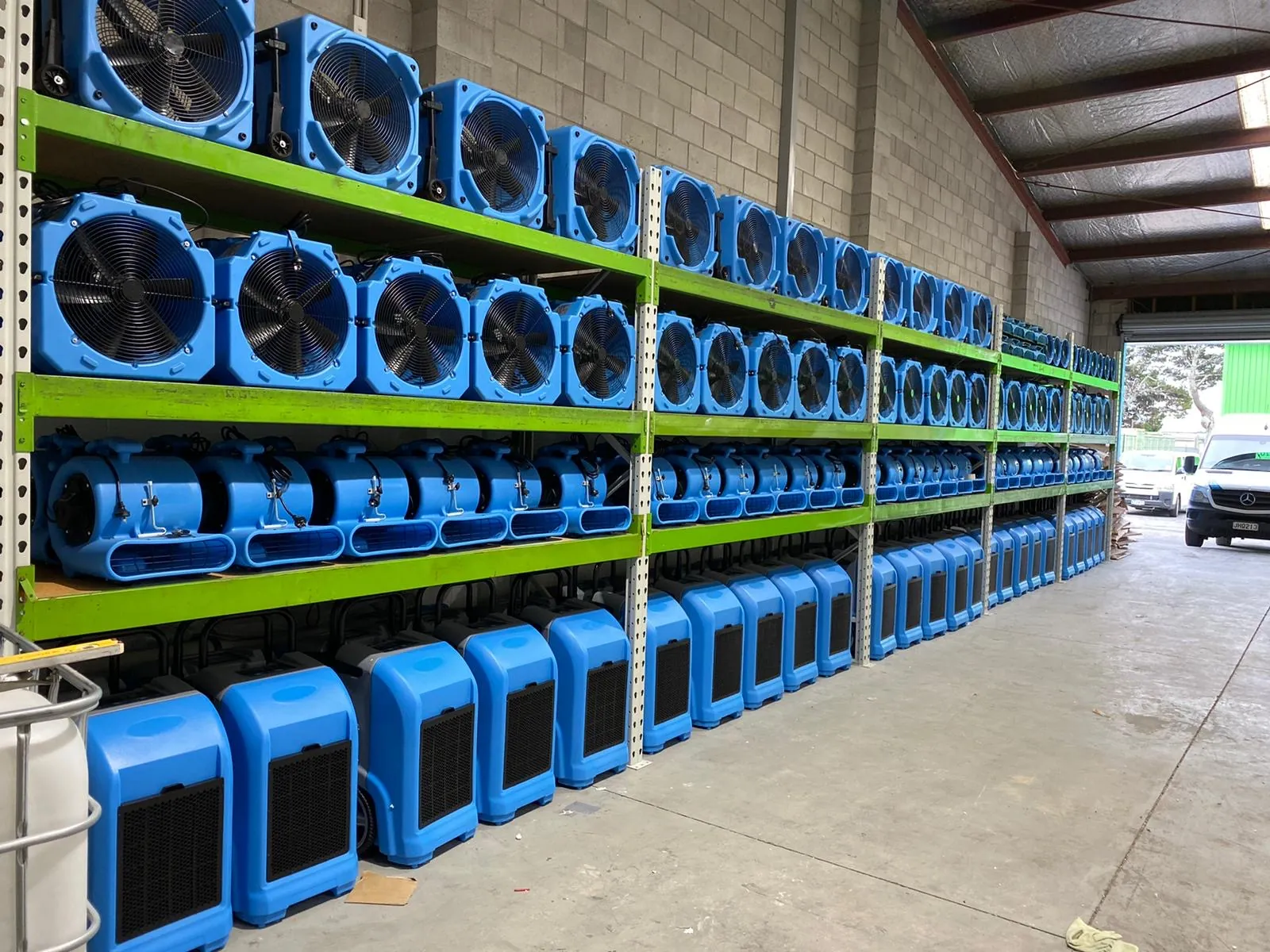
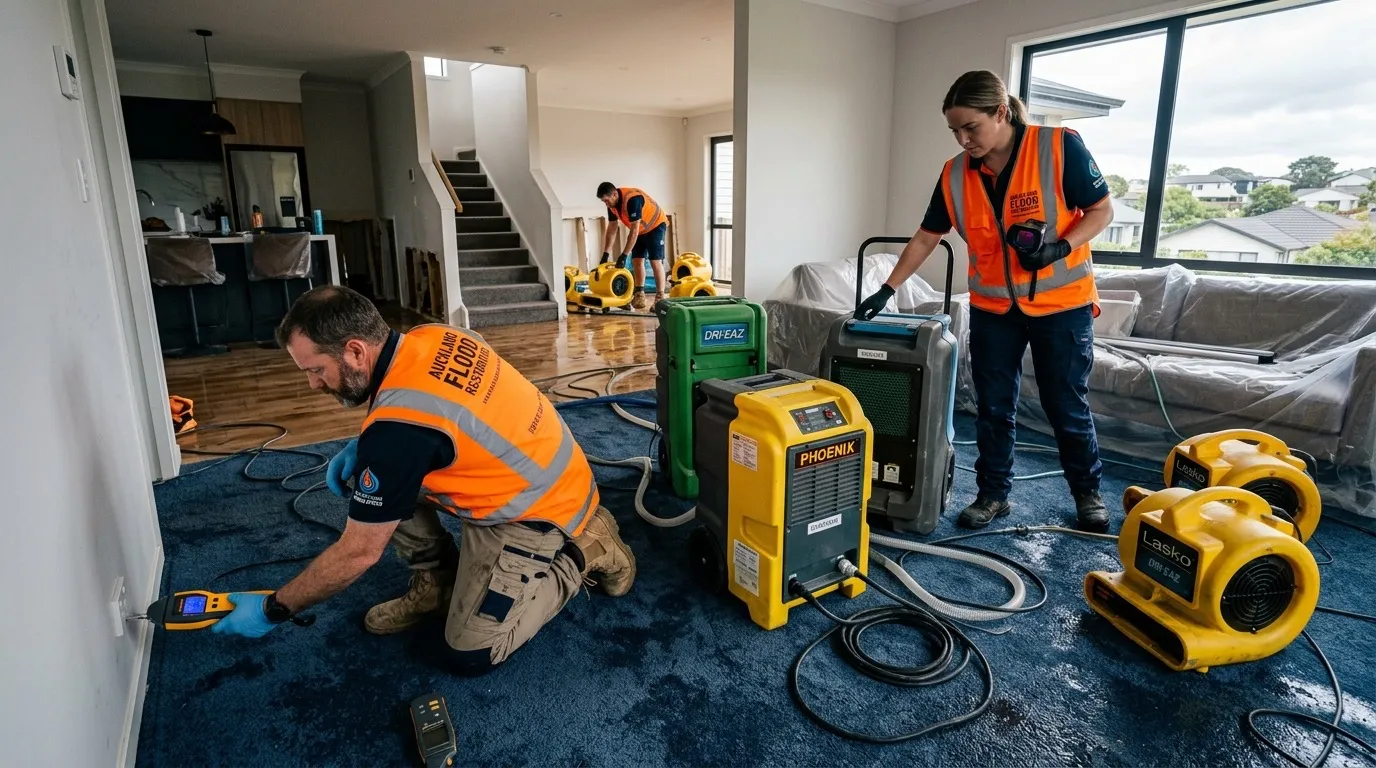
Professional drying is different. A certified technician uses moisture meters, thermal imaging where appropriate, commercial extraction, dehumidifiers and calibrated air movers. The aim is not just to make the room feel dry; it is to return affected materials to a safe moisture level and prevent secondary damage such as mould, swelling, odour and structural deterioration.
Step 5 — Call a certified restoration specialist immediately
Once people are safe and the leak is stopped or contained, call a restoration company. The sooner trained technicians assess the property, the better the chance of saving carpet, underlay, skirting, wall linings and contents. After 24 to 48 hours, moisture trapped in Auckland’s humid conditions can become a mould risk, especially inside wardrobes, behind kitchen kickboards and under carpet.
Ask for a team that can handle emergency extraction, structural drying, moisture reports and insurer communication. iDry Restorations provides 24/7 flood restoration in Auckland, water damage restoration, mould remediation, fire restoration, biohazard cleaning and meth cleanup. If you are unsure whether the water is safe or contaminated, call first and describe what has happened.
Frequently asked questions
How quickly should I call for flood restoration in Auckland?
Call as soon as people are safe and the water source is controlled. Fast professional extraction and drying in the first few hours can reduce damage, odour, mould risk and repair costs.
Will my insurance cover water damage in Auckland?
Many sudden and accidental water damage events are covered, but policies vary. Document everything, contact your insurer, and ask your restoration team for moisture readings and reports to support the claim.
Can wet carpet be saved after a flood?
Sometimes, yes. It depends on the water category, how long it has been wet, the carpet construction and whether the underlay or subfloor is affected. Contaminated water usually requires removal of affected porous materials.
What should I avoid after a house flood?
Avoid entering unsafe areas, using electrical appliances near water, running household fans or heaters, and throwing away damaged items before photographing them for insurance.
iDry Restorations — Auckland's 24/7 Flood Response Team
Need urgent help now? Call 0800 452 199 or book online. Our Auckland team can respond quickly, assess the damage, extract water and begin controlled drying.