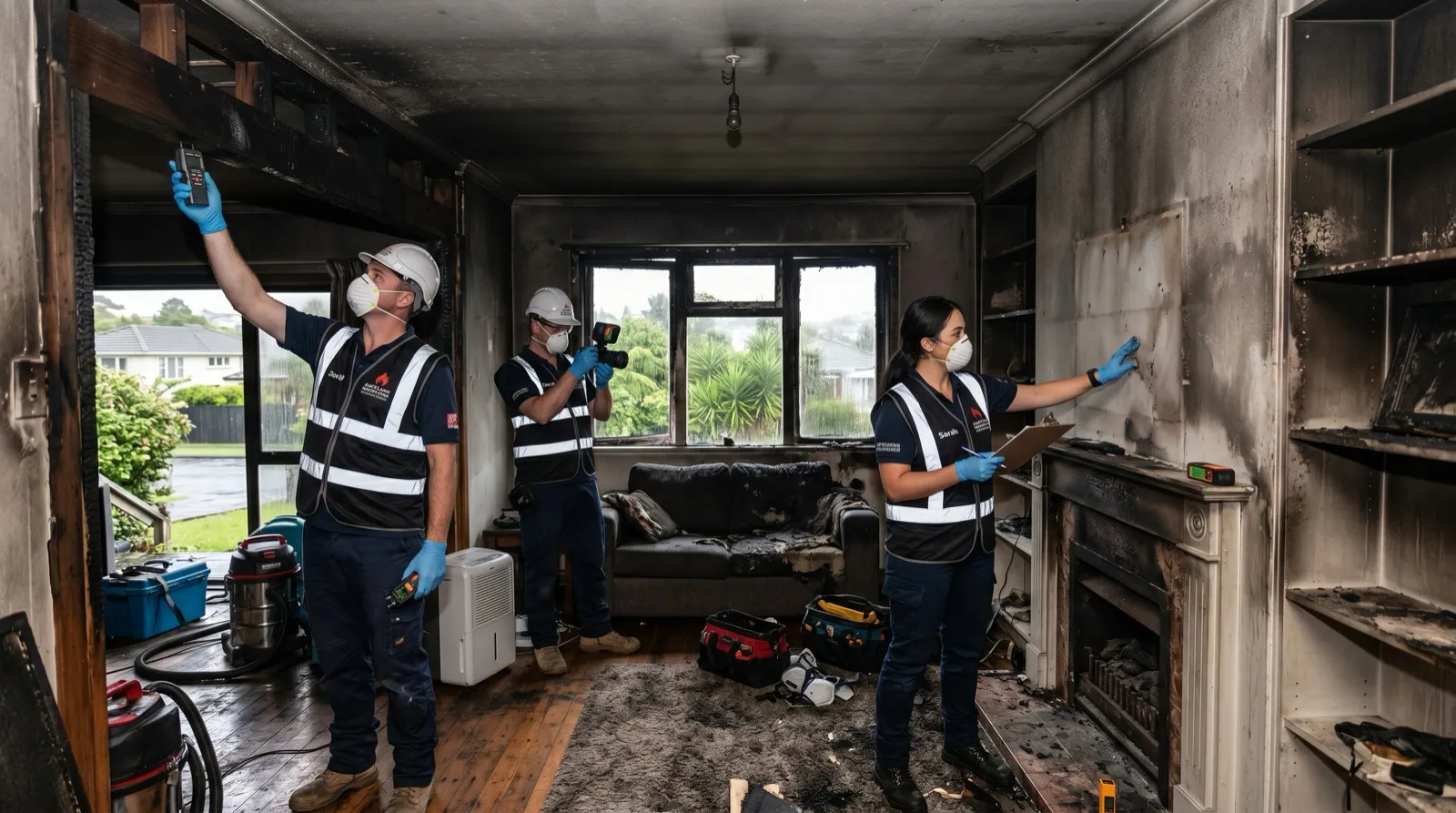
A house fire is frightening, disruptive and emotional. Once everyone is safe, the next question is usually: what happens now? The first 24 hours can make a major difference to your recovery. Professional fire damage restoration Auckland work is not just about removing charred material. It includes smoke odour control, soot cleaning, moisture management, structural assessment, contents handling and detailed documentation for your insurance claim.
This guide is for Auckland homeowners dealing with kitchen fires, electrical fires, garage fires, smoke-affected rooms or wider property damage. Follow the steps in order, and only do what is safe.
Step 1 — Make safety and official clearance the priority
Do not enter the property until Fire and Emergency New Zealand or the relevant authority says it is safe. Even a small fire can weaken ceiling linings, damage wiring, crack glass, leave hot spots in wall cavities or contaminate surfaces with fine soot. Keep children, pets and visitors away from the house until hazards have been assessed.
If you are allowed to enter briefly, wear closed shoes, gloves and a mask. Do not switch on lights, appliances, heat pumps or ventilation systems. Smoke particles can be drawn deeper into ducts and clean rooms, making restoration harder.
Step 2 — Call your insurer and document the damage
Contact your insurance company as soon as practical and ask what emergency work is approved. Most insurers expect homeowners to take reasonable steps to prevent further damage, but they also need evidence. Take photos and videos before anything is moved: the fire source, affected rooms, soot patterns, smoke staining, damaged contents, wet carpet, ceilings, cabinetry and external damage.
Make notes about the date, time, likely cause, emergency services attended and urgent actions taken. Keep receipts for accommodation, electrical checks, board-up, security or essential purchases. A professional restoration team can support the claim with photos, scope notes and reports.
Step 3 — Understand soot and smoke damage
Soot is acidic, oily and highly mobile. It can stain paint, corrode metal, etch glass, discolour plastics and settle inside cupboards, wardrobes, electronics and HVAC systems. Smoke odour can also absorb into porous materials such as carpet, curtains, mattresses, soft furnishings and timber framing. The longer residue sits, the more difficult and expensive it can be to remove.
Different fires produce different residues. A protein fire from burnt food may leave little visible charring but a strong, greasy odour. Synthetic materials can create sticky soot and hazardous residues. Timber and paper fires behave differently again. That is why professional smoke damage Auckland restoration starts with identifying the residue, then choosing the correct cleaning method rather than wiping everything with household products.
Step 4 — Do not start DIY cleaning too soon
It is tempting to scrub soot from walls or spray air freshener through the home. Unfortunately, DIY cleaning often sets stains, spreads residue or masks odour without removing the source. Water-based cleaning on the wrong soot can smear it into paint and plasterboard. Vacuuming with a standard household vacuum can release fine particles back into the air.
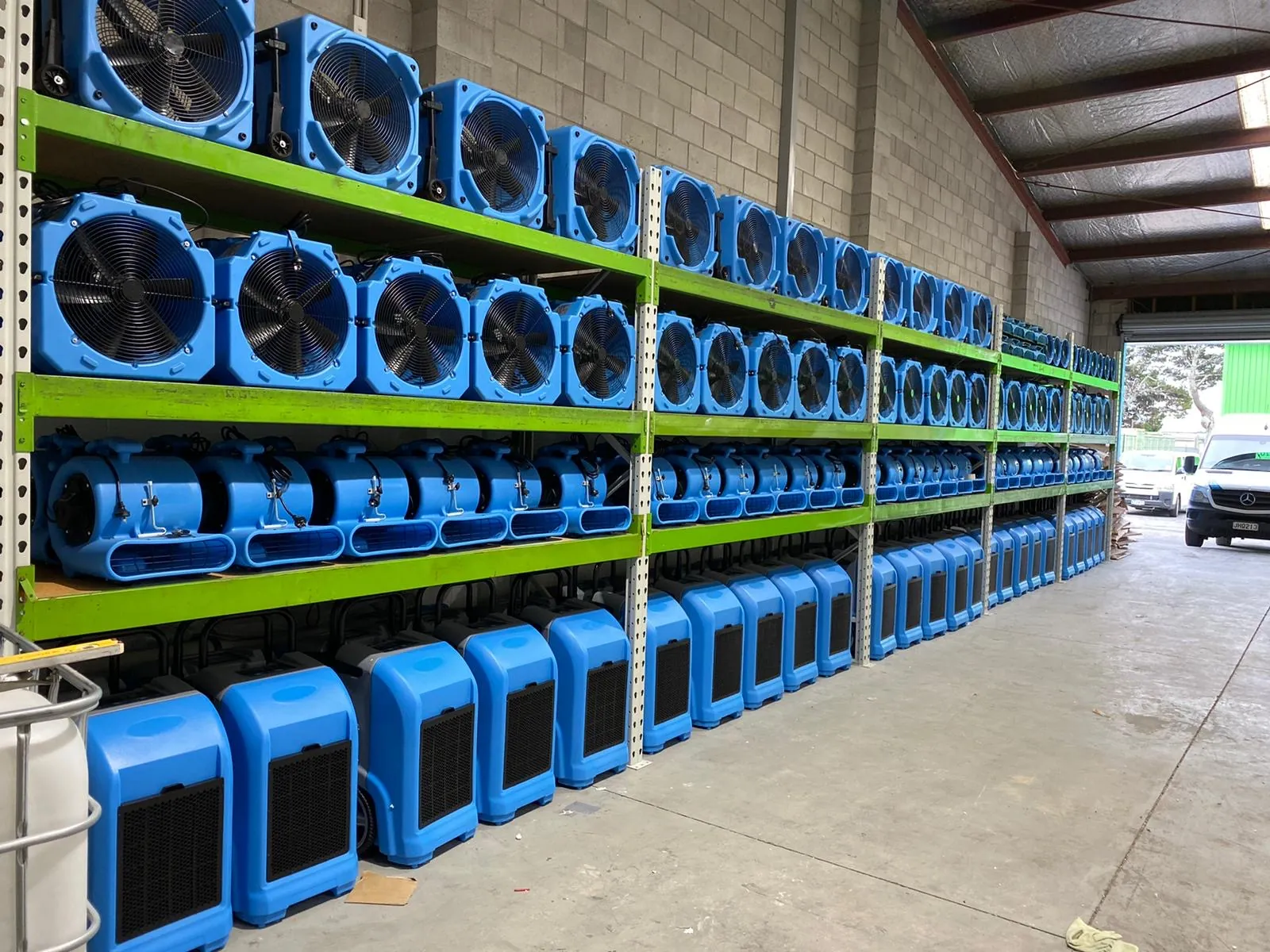
Professional fire restoration uses controlled containment, HEPA filtration, dry soot removal, specialist surface cleaning, thermal fogging or ozone where appropriate, and targeted removal of unsalvageable material. If firefighting water has affected carpet, timber flooring, insulation or wall cavities, drying must also begin quickly to prevent mould and secondary water damage.
Step 5 — Arrange structural and services assessment
Before reinstatement begins, the property may need checks from a builder, electrician, plumber, gasfitter or engineer. Fire can compromise framing, roof spaces, cladding, wiring, switchboards, pipes and load-bearing elements. Smoke can also travel far beyond the burnt room.
A restoration assessment maps the affected zones: direct flame damage, heat damage, soot contamination, smoke odour and water damage from firefighting. This helps separate emergency stabilisation from repair work and gives your insurer a clearer scope. In Auckland’s humid conditions, fast drying and dehumidification can be just as important as soot cleaning.
Step 6 — Protect and restore contents where possible
Do not throw away belongings until they have been photographed and discussed with your insurer. Some items are unsafe to save, but many contents can be cleaned, deodorised and packed out for restoration.
iDry can triage contents into salvageable, specialist-cleaning and disposal categories. The goal is to recover what can be saved, document what cannot, and reduce stress during an already difficult time.
When to call iDry for fire damage restoration in Auckland
Call as soon as the property is safe to access or your insurer authorises emergency attendance. iDry Restorations provides 24/7 Auckland response for fire restoration, smoke and soot cleanup, water damage restoration, flood restoration, mould remediation, biohazard cleaning and meth cleanup. Our team can assess the damage, stabilise the property, begin drying and cleaning, and help you understand the restoration pathway.
Frequently asked questions
What should I do first after a house fire in Auckland?
Wait for official clearance, keep people and pets out, contact your insurer, take safe photos, and call a restoration specialist before cleaning soot or smoke residue.
Can smoke damage be removed after a fire?
In many cases, yes. Professional restoration uses HEPA filtration, soot removal, deodorisation and cleaning methods matched to the surface and smoke residue.
Should I throw away fire-damaged contents?
Not before photographing them and speaking with your insurer. Some contents can be restored, while unsafe porous items may need documented disposal.
Does iDry provide 24 hour fire restoration in Auckland?
Yes. iDry provides 24/7 emergency response for fire, smoke, soot and water damage from firefighting efforts across Auckland.
iDry Restorations — Auckland's 24/7 Fire Damage Response Team
Need urgent help after a fire? Call 0800 452 199 or book online. Our Auckland team can respond quickly, assess smoke, soot and water damage, and start the restoration process.