The Problem
New Zealand Blood Service Limited — a critical healthcare facility — experienced a Category 3 flood caused by rain leakage from the ceiling and the car park. The flood affected multiple levels of the building, creating an extensive and complex restoration challenge.
The damage extended across four distinct areas of the facility:
- Basement floor — significant water accumulation and material damage
- Car park — water ingress from external sources
- Ground floor — carpet saturation, wall damage, and surface contamination
- Level 1 — the most severely affected level with extensive water damage to carpets, walls, and various surfaces
As a healthcare facility essential to New Zealand's blood supply, the building required restoration that met the highest standards of cleanliness and safety. The multi-level nature of the damage added considerable complexity, as each level required its own drying strategy and monitoring regime.
Our Approach
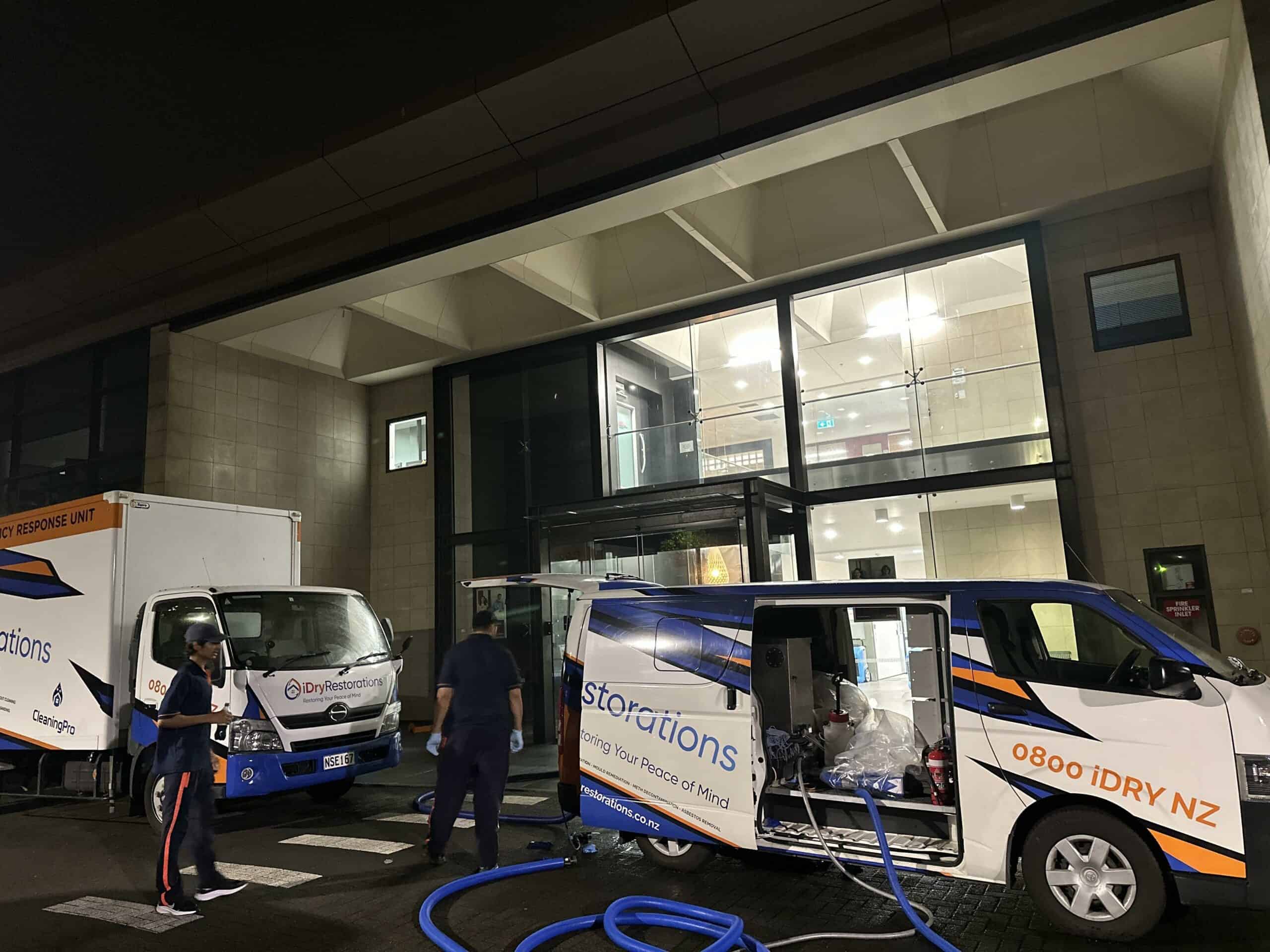
iDry Restorations deployed a rapid after-hours response on the day of the incident. Given the scale and complexity of the project, our strategy focused on three parallel workstreams: water extraction and cleaning, structural drying, and ongoing monitoring and adaptation.
Phase 1: Emergency Response & Extraction
Our team arrived after-hours on 27 January 2023 to begin the emergency response. The immediate priorities were:
- Extracting excessive water from all affected surfaces across all four levels
- Cleaning and disinfecting all impacted areas with professional antimicrobial treatments
- Installing commercial dehumidifiers and blowers on each affected level
- Conducting initial moisture mapping to identify the full extent of water penetration
All work followed IICRC/S500 international standards for water damage restoration, which was especially critical given the healthcare nature of the facility.
Phase 2: Structural Interventions
As the drying process progressed, it became clear that structural interventions were necessary to address hidden moisture:
- Wall sections were opened — GIB was cut to expose saturated wall cavities and allow targeted drying of timber framing
- Insulation was removed — waterlogged insulation batts were extracted from wall cavities as they could not be adequately dried in place and posed a mould risk
- Carpet replacement recommended — per IICRC/S500 standards, we recommended full replacement of affected carpeting due to Category 3 contamination
Phase 3: Monitoring & Adaptation
The restoration was not without challenges. During the drying process, the building's air conditioning system failed, causing temperature elevation throughout the facility. Elevated temperatures can accelerate bacterial growth and reduce drying efficiency in enclosed spaces.
Our team adapted by:
- Repositioning blowers to maximise air circulation without AC support
- Increasing dehumidifier capacity in the most affected areas
- Implementing enhanced ventilation strategies using exterior air when conditions permitted
- Conducting more frequent moisture readings to ensure the adapted approach was effective
Daily monitoring continued throughout the 26-day restoration period, with moisture readings taken on every level and equipment adjusted as needed to maintain optimal drying conditions.
The Outcome
After 26 days of continuous professional restoration, the NZ Blood Service facility was fully restored to pre-loss condition. All four levels were returned to acceptable moisture levels, and the building was cleared for full operational use.